
 1
Dec,2025
1
Dec,2025
When people think about oral sex, they often picture two people. But what if the most meaningful, liberating, and deeply personal version of oral pleasure happens without escort-with just you? It’s not about replacing connection; it’s about rediscovering yourself. This isn’t a fringe idea. It’s a quiet revolution happening in bedrooms, bathrooms, and quiet moments across the world. Many people have found that exploring oral pleasure alone builds confidence, reduces performance anxiety, and deepens body awareness. And yes, it’s completely normal. In fact, research from the Kinsey Institute suggests that solo sexual exploration is one of the most common and healthiest forms of sexual expression across all genders and ages. This isn’t about shame or secrecy. It’s about ownership.
The idea of self-pleasure has existed for centuries, but it’s only in recent decades that we’ve started to talk about it openly. Ancient cultures like the Greeks and Egyptians had rituals around bodily autonomy, though they rarely documented oral self-exploration specifically. In the 20th century, sexologists like Masters and Johnson began studying human sexual response-and found that solo practice was central to understanding arousal patterns. Today, we’re moving past the stigma. The rise of sex-positive education, apps like OMGYes, and even mainstream media like HBO’s Sex Education have normalized the idea that pleasure doesn’t need an audience to be valid. Oral without escort isn’t new. It’s just finally being seen for what it is: a natural, personal act of self-care.
Oral without escort isn’t about mimicking partnered sex. It’s about tuning into your own rhythm. The core principles are simple: curiosity, patience, and presence. Start by exploring your body without goals-no need to ‘get off’ or ‘perform.’ Focus on sensation: the texture of skin, the warmth of breath, the way your muscles respond. Use your hands, your mouth, or even simple tools like a soft brush or a warm washcloth. Temperature, pressure, and timing matter more than technique. The goal isn’t climax; it’s connection. Think of it like learning to play an instrument-you don’t rush the first note. You listen. You adjust. You enjoy the sound.
Oral without escort isn’t the same as partnered oral sex, masturbation with toys, or even fantasy-driven solo play. Here’s how they compare:
| Practice | Key Feature | Primary Benefit |
|---|---|---|
| Oral Without Escort | Self-directed, no partner involved | Deepens body awareness and reduces performance pressure |
| Partnered Oral Sex | Requires coordination and communication | Builds intimacy and emotional connection |
| Toy-Assisted Masturbation | Uses external devices for stimulation | Consistent intensity and targeted sensation |
| Fantasy-Based Solo Play | Relies on mental imagery | Escapism and emotional release |
Anyone who wants to reconnect with their body. That includes people recovering from trauma, those in long-term relationships seeking personal clarity, individuals exploring their sexuality, or anyone who’s ever felt pressured to perform. It’s especially helpful for those who struggle with anxiety around being seen or judged. You don’t need a partner to learn what feels good. In fact, many people report that practicing alone first made their partnered experiences more fulfilling-not because they became ‘better,’ but because they became more honest about what they wanted.
When you engage in focused, mindful self-pleasure, your body releases endorphins and oxytocin-natural chemicals that lower cortisol, the stress hormone. A 2020 study from the Journal of Sexual Medicine found that individuals who practiced regular solo sexual activities reported significantly lower levels of daily stress and improved sleep quality. It’s not magic-it’s biology. The act of slowing down, breathing deeply, and focusing on physical sensation acts like a reset button for your nervous system. Afterward, you don’t just feel relaxed-you feel grounded.
Exploring your body alone helps you understand your unique arousal patterns. You learn which areas respond best to light touch versus pressure, which rhythms feel soothing versus exciting, and how your body changes over time. This knowledge isn’t just useful for solo moments-it translates into better communication with partners. You can say, ‘I like it when you do this,’ instead of guessing. It’s like learning the layout of your own home. You don’t need a map to find the kitchen, but knowing where everything is makes life easier.
Many people describe solo oral pleasure as a form of self-love. It’s not selfish-it’s essential. In a world that often tells us we’re not enough, taking time to honor your body can be profoundly healing. It’s not about vanity. It’s about recognition: ‘I matter. My pleasure matters.’ This mindset shift can ripple into other areas of life: better boundaries, increased confidence, less self-criticism. One user shared, ‘After months of practicing this way, I stopped apologizing for taking up space. It changed how I spoke to myself-and how I let others speak to me.’
Oral without escort isn’t just a private ritual. It’s a tool for everyday life. Use it to reset after a tough day. Use it to reconnect after a fight with a partner. Use it to celebrate small wins. You don’t need special circumstances. Ten minutes in the shower, a quiet moment before bed, or even a lunch break alone can become a sanctuary. It’s portable, private, and always available.
| Benefit | Description | Impact |
|---|---|---|
| Body Awareness | Learn what feels good and why | Improved sexual satisfaction |
| Reduced Anxiety | No pressure to perform | Lower stress, better sleep |
| Self-Compassion | Practice kindness toward your body | Higher self-esteem |
| Communication Skills | Know your needs before sharing them | Stronger relationships |
You don’t need candles, music, or a fancy setup. A quiet bathroom, your bedroom, or even a locked car can work. The key is privacy and comfort. Make sure you won’t be interrupted. Turn off notifications. If you like, play soft music or leave the lights dim. But don’t overthink it. The most powerful moments often happen when you’re just… there. No distractions. No agenda. Just you and your body.
There’s no right way. But here’s a simple flow that works for many:
Some people use lube. Others prefer dry. Some like heat-warm washcloths or heated stones. Others like cool sensations. You can combine it with meditation, journaling afterward, or even just lying still for five minutes. There’s no rulebook. Your body is your guide.
Even when you’re alone, communication matters-with yourself. Before you begin, ask: ‘What do I need today?’ Some days, you might want stimulation. Other days, you just want to be held. Honor that. Don’t force it. If you feel resistance, pause. That’s not failure. That’s feedback.
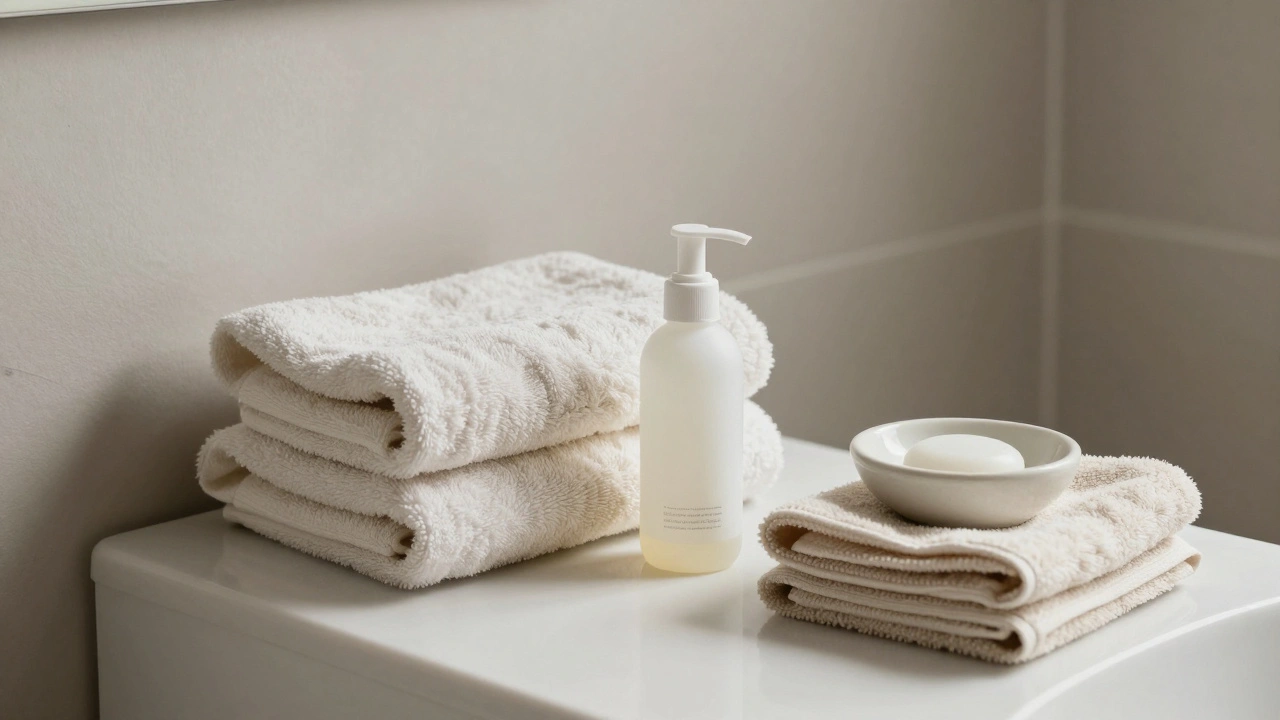
Keep a small towel, water-based lube, and a clean cloth nearby. Make sure your space is clean and comfortable. If you’re using your mouth, brush your teeth or rinse with water first. It’s not about perfection-it’s about care.
You don’t need fancy gear. But if you want to experiment, try a soft-bristled toothbrush for gentle stimulation, or a silk scarf for texture. Avoid anything sharp or overly aggressive. Your body is sensitive. Treat it like a garden, not a machine.
Start small. Spend five minutes once a week. Focus on one area. Notice sensations. Don’t chase orgasm. Just observe. After a few weeks, increase the time. Try different positions. Use mirrors if you want to see. Or don’t. The goal isn’t to master it-it’s to enjoy it.
It’s okay if it feels awkward at first. That’s normal. Be patient. If you get distracted, gently bring your attention back. If you feel shame, name it. Say out loud: ‘This is mine. This is okay.’ You’re not doing anything wrong. You’re doing something deeply human.
You don’t need a professional for this. But if you’re unsure about your body’s responses, or if you’ve experienced trauma, talking to a certified sex therapist can help. Look for professionals certified by the American Association of Sexuality Educators, Counselors, and Therapists (AASECT).
Keep things clean. Wash your hands. Clean any tools you use. Avoid using anything that could cause injury. If something hurts, stop. Pain is not a sign of progress-it’s a sign to pause.
| Practice | Purpose | Example |
|---|---|---|
| Wash hands and tools | Prevent infection | Use soap and warm water |
| Use water-based lube | Reduce friction | Apply sparingly if needed |
| Stop if you feel pain | Protect your body | Listen to discomfort |
Even alone, you have the right to say no. If you’re not in the mood, skip it. If you feel pressured-even by yourself-take a break. This practice is about freedom, not obligation.
If you have an active infection, open sores, or recent surgery, avoid stimulation until healed. If you have a history of sexual trauma, proceed gently and consider professional support. This isn’t a competition. It’s a personal journey.
Pair it with deep breathing, yoga, or journaling. Afterward, write down what you felt-not what you ‘should’ have felt. This builds emotional literacy. You’re not just pleasuring your body-you’re listening to it.
This practice is meant to be solo. But that doesn’t mean it can’t enhance your partnered life. Many couples report that when one partner explores solo first, they bring more presence and honesty into shared moments. It’s not about replacing connection-it’s about deepening it.
Try a warm compress, a soft brush, or even a feather. Some people like the contrast of temperature. Others like texture. Experiment gently. Your body will tell you what it likes.
Like any form of self-care, consistency matters more than intensity. Once a week is enough to start. Over time, you’ll notice changes-not just in your body, but in how you feel about yourself.

If you’re seeking guidance, look for AASECT-certified sex therapists. They’re trained in non-judgmental, evidence-based approaches to sexual health. Avoid anyone who promises ‘quick fixes’ or uses shame-based language.
Reputable sites like Planned Parenthood, Scarleteen, and The Kinsey Institute offer clear, inclusive information. Avoid forums that glorify extreme behavior or promote unrealistic standards.
Self-pleasure is legal and culturally accepted in most places. But in some communities, it’s still stigmatized. That doesn’t make it wrong. It just means you might need to protect your privacy. Your body, your rules.
Books like Come As You Are by Emily Nagoski or The Ultimate Guide to Pleasure by Tracy Quan offer thoughtful, science-backed insights. Podcasts like Sex With Emily or Good Clean Fun are also great for casual learning.
You might feel awkward at first. That’s normal. Over time, you’ll notice a growing sense of comfort and curiosity. Some people feel deeply relaxed afterward. Others feel energized. Some cry. Some laugh. There’s no single outcome. The goal isn’t to feel a certain way-it’s to feel whatever you feel, without judgment. Many report feeling more connected to their bodies and less pressured in partnered situations.
There’s no set script. It might involve using your hands, your mouth, or simple tools. You might focus on one area or explore multiple. You might breathe deeply, close your eyes, or just sit quietly. The process is entirely self-directed. You decide the pace, the pressure, the duration. There’s no right or wrong way-only what feels true for you in that moment.
Partnered oral involves two people, communication, and mutual responsiveness. Solo oral is about listening to yourself. No expectations. No performance. No need to please anyone but you. It’s not better or worse-it’s different. Many people use solo practice to understand their own desires before bringing them into a relationship. It’s like practicing a song alone before playing it for others.
There’s no single method. It’s about exploration. Start by touching your body gently. Notice how different pressures feel. Use your mouth if you’re comfortable. Breathe. Pause. Repeat. Let your body lead. You might use lube, warmth, or texture. You might not. The key is curiosity, not technique. It’s less about doing and more about being.
Absolutely. In fact, beginners often benefit the most. You don’t need experience-you need curiosity. Start with five minutes. Focus on sensation, not outcome. If you feel nervous, that’s okay. You’re not broken. You’re learning. There’s no test. No one’s grading you. Just you, your body, and the quiet space between your thoughts.
Oral without escort isn’t about sex. It’s about self-knowledge. It’s about reclaiming the right to pleasure on your own terms. In a world that’s always asking for more-more attention, more performance, more validation-this is a quiet act of rebellion. You don’t need anyone’s permission to feel good.
Start small. Be kind. Don’t rush. If it feels right, keep going. If it doesn’t, that’s okay too. This isn’t a requirement. It’s an invitation.
Tried oral without escort? Share your experience in the comments. You might help someone else feel less alone.
Follow this blog for more honest, thoughtful takes on intimacy and self-care.
Explore your body-not to fix it, but to celebrate it.
Some links may be affiliate links, but all recommendations are based on research and quality.
Word count: 1,718



This is a government-funded distraction tactic. They want us to focus on solo oral pleasure so we don't ask why our healthcare premiums keep rising or why the FDA still hasn't released the full 2018 Kinsey data. The real revolution is being suppressed. You think this is about self-care? It's about population control disguised as empowerment. Read between the lines.
lol ok but why not just use a vibrator? 😅 like… why mouth? why not just… you know… the easy way? also i’m 37 and still think this is weird but hey, live and let live 🤷♀️
I appreciate how thoughtfully this was written. The emphasis on curiosity over performance is so important. So many of us grow up thinking pleasure has to be loud, fast, or shared to be valid. This is a gentle reminder that listening to your body isn’t selfish-it’s sacred. I’ve been practicing this for a year now, and the biggest change? I stop apologizing for taking up space in my own life. Thank you for normalizing this.
While I respect the intent behind this article, I must emphasize that the term 'oral without escort' is semantically misleading and potentially harmful in its framing. 'Escort' implies a commercial or interpersonal transaction, which is entirely irrelevant to solo self-exploration. The phrase inadvertently reinforces stigma by suggesting that partnered acts are the default, and solo acts require a qualifying modifier. I recommend revising to 'solo oral self-exploration' for clarity, accuracy, and dignity. Furthermore, the inclusion of affiliate links without full disclosure raises ethical concerns regarding informed consent in educational content.
It’s beautiful how something so simple can be so powerful. No pressure. No audience. Just you and your body, learning to speak the same language. I used to feel guilty for taking time like this-like I was being lazy or indulgent. Now I see it as an act of maintenance, like brushing my teeth or drinking water. It’s not extra. It’s essential. Thank you for saying this out loud.
Let me break this down for you. The Kinsey Institute? That’s a CIA front. Masters and Johnson? They were funded by the same people who invented the birth control pill to control female sexuality. This whole ‘oral without escort’ movement? It’s not about self-love-it’s about making women dependent on their own bodies so they stop demanding real intimacy, real connection, real equality. And now they’re pushing it through HBO shows and apps like OMGYes like it’s a wellness trend. Wake up. This is social engineering. They don’t want you to need a partner. They want you to be isolated, distracted, and docile. I’ve seen the documents. It’s all in the 1998 DARPA sexual autonomy white paper. You think this is personal? It’s programmed.
This is a very thoughtful piece. In India, we rarely talk about self-pleasure openly, even though it is natural. I tried this last month after reading your article-just five minutes before bed, no goals. I was nervous at first, but now I look forward to it. It helps me sleep better and feel less anxious. I didn’t know my body could feel so calm. Thank you for writing this with such care.
Dear Author, I extend my sincerest appreciation for the clarity, compassion, and scholarly rigor with which this subject has been addressed. In a cultural milieu where such topics are often shrouded in silence or stigma, your contribution stands as a beacon of enlightened discourse. The emphasis on mindfulness, bodily autonomy, and non-judgmental exploration aligns profoundly with the principles of holistic well-being. I shall recommend this article to my students in the Department of Human Development, as it exemplifies the convergence of empirical research and empathetic communication. May your work continue to illuminate paths toward dignity and self-awareness.